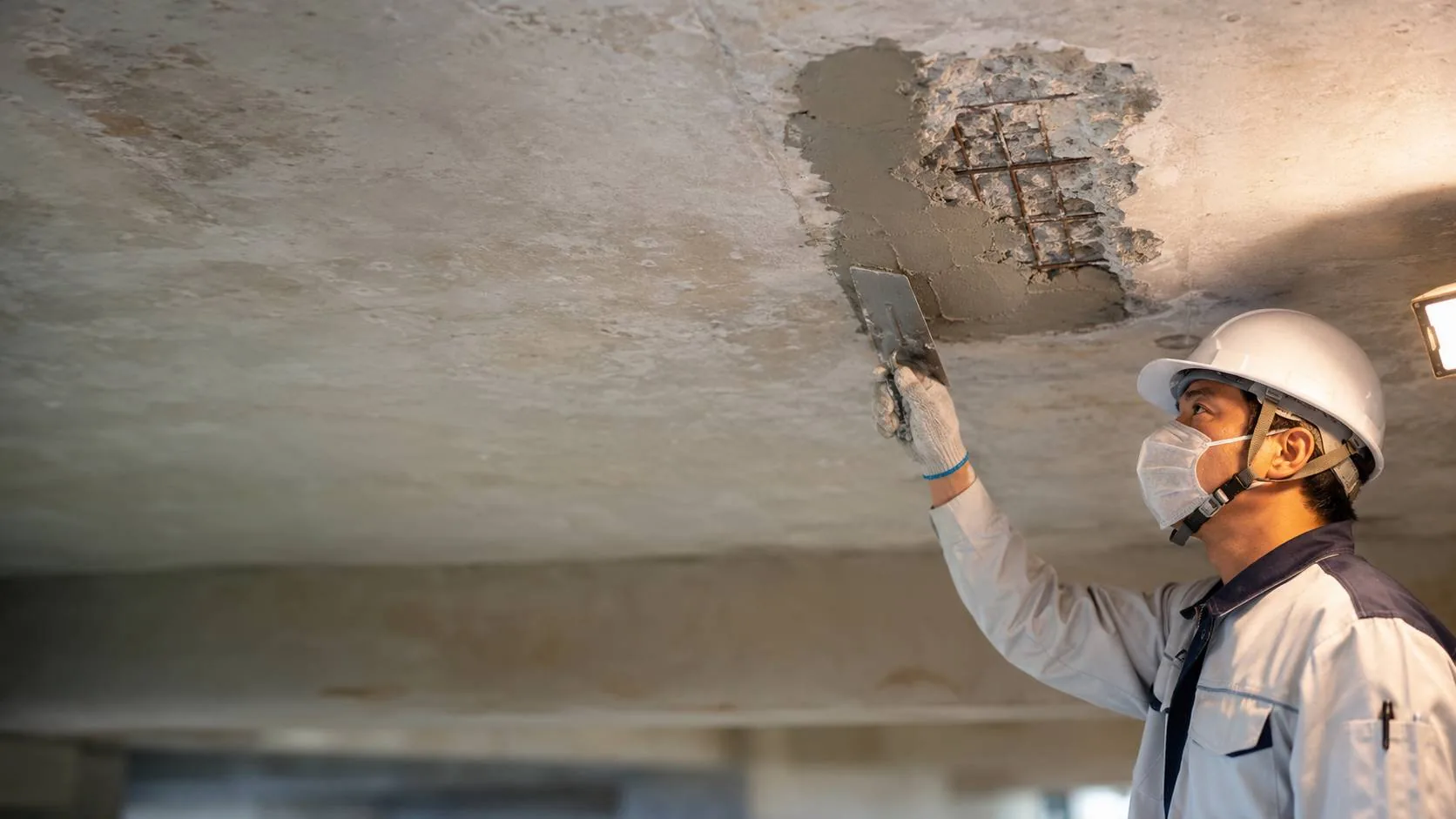
Specialist inspecting a mould-affected bedroom wall in a Singapore HDB flat

Specialist services · Mould

Mould Removal & Anti-Mould Painting in Singapore

M

Inspection, fungicidal treatment, surface repair and anti-mould paint — the full cycle, done by one team in one visit.

Treat the cause, not the stain

Why does mould keep coming back after cleaning?

Because wiping the surface only removes what you can see. Mould returns when the conditions that feed it remain — trapped humidity, condensation on cool walls, a slow leak, or a room that never quite dries out. In Singapore's climate, indoor humidity stays high all year, so any wall that stays damp can re-establish growth within weeks.

Our remediation pairs the two things that actually break the cycle: killing the growth properly with fungicidal treatment, and changing the surface conditions with sealing and anti-mould coatings — alongside straight answers about the moisture source feeding it.

Specialist assessing an affected ceiling before mould treatment
Typical scope
Single wall to whole-room treatment
Treatment system
Fungicidal wash · sealer · anti-mould paint
Turnaround
Most single rooms done in a day
Quotation
Free inspection, fixed itemised quote

Our 6-step treatment

How we remove mould — and keep it gone.

Each stage exists for a reason. Skip one, and the problem resurfaces within months — which is exactly what happens with wipe-and-paint shortcuts.

01

Mould Inspection & Moisture Check

Every treatment starts with the question that matters: why is this wall damp? We inspect the affected rooms, map how far growth extends beyond what is visible, and trace the likely moisture source — condensation, a slow leak or poor airflow — so the fix lasts instead of repeating.

Specialist reading a moisture meter on a mould-speckled wall in Singapore
02

Containment & Protection

Before any cleaning starts, the work zone is isolated. Furniture is moved out or sealed under sheeting, floors are covered, and the room is kept separated so spores and debris disturbed during treatment do not spread through the rest of your home.

Bedroom furniture and floors sealed under protective sheeting before treatment
03

Fungicidal Treatment

Affected walls and ceilings — plus a margin around them — are treated with a professional-grade fungicidal wash. The solution is given proper dwell time to break growth down at the root, not just the surface bloom, before residue is removed. This is the step household cleaning misses.

Technician in respirator applying fungicidal wash to a mould-affected wall
04

Removal & Surface Repair

Coatings that have blistered, flaked or broken down are stripped back, and damaged plaster is repaired or skim-coated so the wall is sound again. Surfaces are then allowed to dry properly — repainting a damp wall is how mould problems get sealed in.

Flaking mould-damaged paint being stripped back and the plaster filled smooth
05

Stain-Blocking & Sealing

Mould leaves shadows and stains that bleed through ordinary paint. A stain-blocking sealer locks down the treated surface, isolating residual marks so the finish coats stay clean and uniform.

Stain-blocking sealer rolled over a treated wall, covering the last mould shadows
06

Anti-Mould Painting

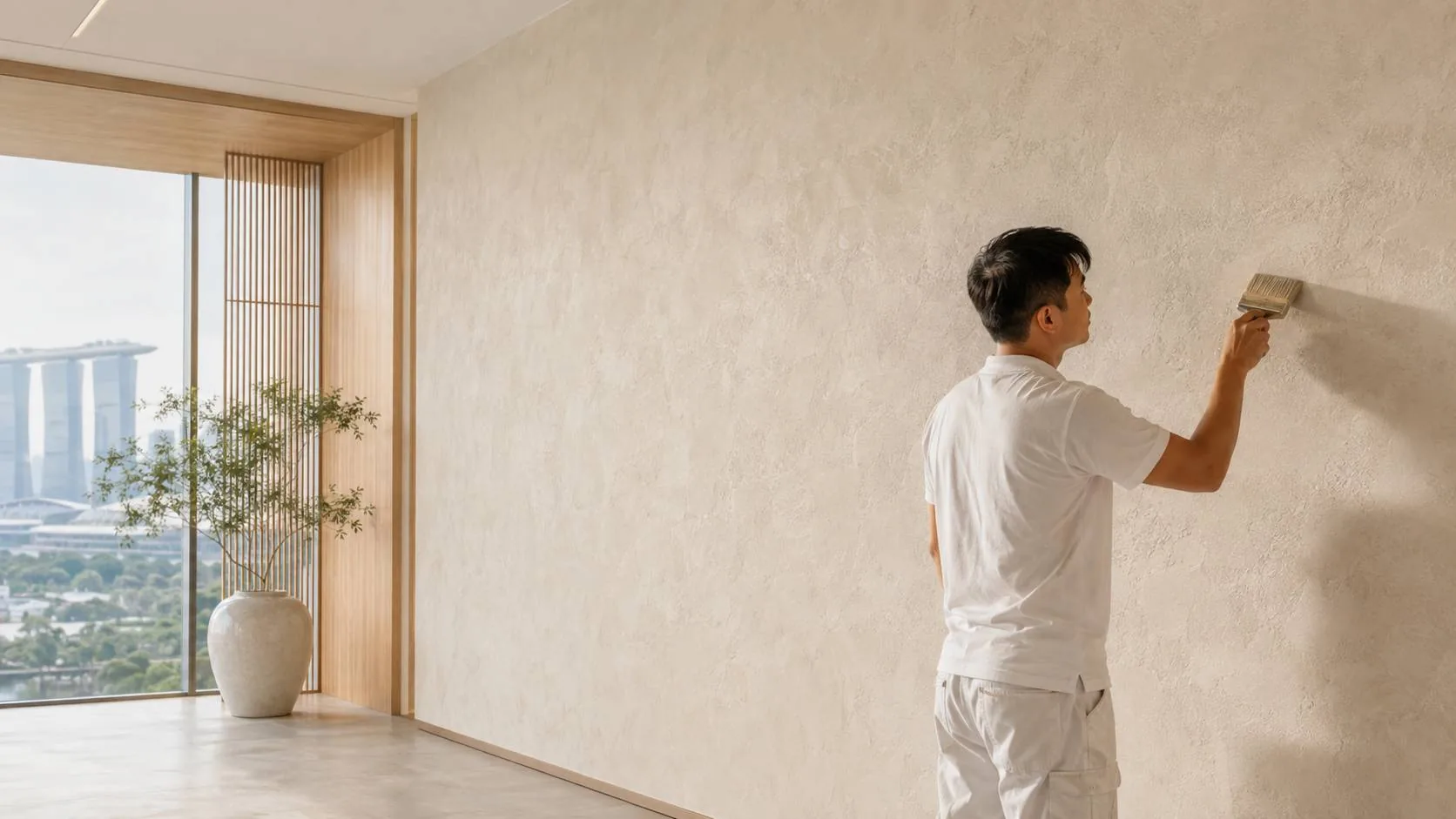
The room is finished with an anti-mould paint system in your chosen colours. The paint film carries a fungicide that inhibits new growth on the surface — the final layer of protection, applied over a properly treated and sealed wall.

Painter applying the finishing anti-mould coat in a clean Singapore bedroom

The honest caveat

Paint cannot fix a leak.

Where we find active water ingress — a failed roof joint, a leaking pipe, inter-floor seepage — we will tell you plainly and point you to the right specialist to stop the water first. Treating and repainting over an unresolved leak wastes your money, and we would rather lose a day's work than sell a treatment that cannot hold.

Early warning signs

Six signs the mould problem is bigger than it looks.

Two or more of these usually means growth inside the paint film or the plaster behind it — not just on the surface.

Anti-mould paint system being applied as a finishing coat

The finishing layer

What does anti-mould paint actually do?

Anti-mould paints carry fungicidal agents within the paint film itself. On a properly treated wall, the film resists new spores taking hold, stays washable, and holds its colour in humid rooms — which is why we specify it for bathrooms, kitchens, air-conditioned bedrooms and wardrobe interiors.

What it is not: a cover-up. Applied straight over live growth or a damp substrate, any paint — anti-mould or otherwise — will fail. That is why painting is the last step of our process, never the first.

Pricing, honestly

What affects mould treatment cost?

Caught early, treatment is genuinely inexpensive — cost climbs with spread and repairs. The drivers:

FAQ

Mould removal questions, answered.

What Singapore homeowners ask us most about mould and anti-mould painting.

Can I just paint over mould?

No — and this is the most expensive shortcut in painting. Mould grows straight through fresh paint within weeks, and the new coat peels as the growth lifts it off the wall. The surface must be treated with a fungicidal wash, repaired and sealed first; painting is the final step of the fix, never the fix itself.

Does bleach kill mould on walls?

Household bleach often lightens the stain without killing the root structure inside porous plaster — and the moisture it adds can even feed regrowth. Professional fungicidal washes are formulated to penetrate the substrate, and we pair them with sealing and anti-mould coatings so the result lasts.

How long does mould removal take?

Most single-room treatments are completed within a day, with drying time between the treatment, repair and painting stages. Larger areas or walls needing plaster repair typically run two to three days. Your quotation states the schedule exactly.

Is mould on walls harmful?

It is worth taking seriously. Mould spores can aggravate allergies and respiratory sensitivity — particularly for children, elderly family members and anyone with asthma — and beyond health, active growth steadily damages paintwork and plaster. Early treatment is smaller, cheaper and safer.

Will the mould come back after treatment?

Not if both causes are addressed: the growth itself and the moisture feeding it. Our treatment handles the first; our inspection identifies the second — ventilation, condensation or a leak — so you know exactly what keeps the wall clear long-term.

Do you repair the damaged wall as well?

Yes. Flaking coatings are stripped, damaged plaster is repaired or skim-coated, stains are sealed and the room is repainted — one team, one visit, one fixed quotation. You do not need to arrange a separate plasterer and painter.

Which areas do you treat most often?

Bathroom walls and ceilings, air-conditioned bedrooms, wardrobe interiors and the walls behind them, and ceiling corners in older HDB flats and condos — plus offices and commercial premises with condensation issues.

Free mould inspection

Seeing spots come back after every wipe?

Book a free inspection

Certified contractor · trusted paint brands

BCA registered contractor
bizSAFE Star certified
HDB Registered Contractor
Nippon Paint
Dulux
Jotun
Gush Paint
Raffles Paint
Benjamin Moore
WhatsApp us